

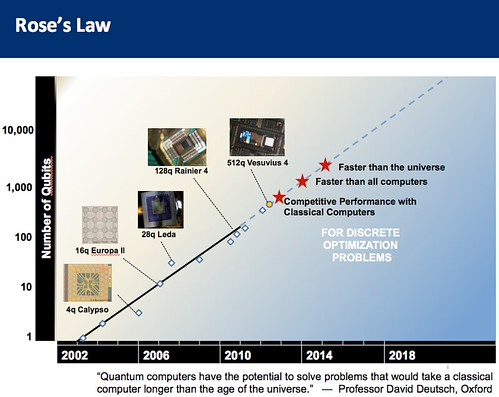
Diamond qubits entanglement has reached a remarkable speed, achieving results 10 times faster at room temperature. This advancement could revolutionize quantum computing.
Understanding Diamond Qubits
Diamond qubits are a promising avenue in the field of quantum computing, primarily due to their unique properties that allow for robust entanglement even at room temperature. These qubits are formed by creating defects in the diamond lattice, specifically nitrogen-vacancy (NV) centers, which can effectively store and manipulate quantum information.
The significance of diamond qubits entanglement lies in their ability to maintain coherence over extended periods, making them suitable for various quantum applications. Researchers have recently made strides in increasing the speed of entanglement processes. A breakthrough was reported where a new parallel gate technology was able to entangle diamond qubits ten times faster than previous methods.
This advancement is crucial as it enhances the efficiency of quantum operations, allowing for more complex computations to be performed in a shorter time frame. The ability to entangle qubits rapidly and reliably is a cornerstone of developing scalable quantum computers.
Moreover, the room temperature operation of diamond qubits distinguishes them from other qubit systems, which often require extreme cooling to function effectively. This characteristic not only simplifies the experimental setup but also paves the way for practical applications in quantum technology.
In conclusion, the progress in diamond qubits entanglement represents a significant leap forward in quantum computing, offering a blend of speed and stability that could define the next generation of quantum devices.
The Significance of Room Temperature
The significance of room temperature in the context of diamond qubits entanglement cannot be overstated. Traditional quantum systems often require extreme cooling to achieve the necessary conditions for entanglement, which complicates their practical applications. However, recent advancements have demonstrated that diamond qubits can effectively operate at room temperature, providing a more accessible and scalable approach to quantum computing.
Operating at room temperature offers several advantages:
- Ease of Integration: Room temperature systems simplify the integration of quantum devices into existing technologies, making them more feasible for commercial use.
- Cost Efficiency: Reducing the need for complex cooling systems significantly lowers operational costs, facilitating broader research and development.
- Increased Stability: Systems that function at room temperature may exhibit greater stability over time, minimizing the risks associated with temperature fluctuations.
Recent breakthroughs, such as the development of a new parallel gate that entangles diamond qubits ten times faster than previous methods, highlight the potential of these qubits in quantum computing. This advancement not only enhances the speed of quantum operations but also reinforces the viability of diamond qubits entanglement as a leading methodology in the field. As researchers continue to explore the possibilities of diamond qubits at room temperature, the implications for quantum technology could be profound, paving the way for a new era of efficient quantum systems.
How Entanglement Works
Entanglement is a fundamental aspect of quantum mechanics that allows particles to become interconnected in such a way that the state of one instantly influences the state of another, regardless of the distance separating them. This phenomenon is crucial for the functionality of quantum computing, where diamond qubits play a significant role.
When two diamond qubits are entangled, they share a quantum state. This means that measurements performed on one qubit will affect the outcome of measurements on the other, establishing a profound connection that can be exploited for various quantum applications.
The process of entangling diamond qubits typically involves the manipulation of their spins or electronic states using lasers or microwave pulses. Recent advancements have led to the development of new parallel gate techniques, enabling researchers to entangle diamond qubits at a rate ten times faster than previous methods. This breakthrough is particularly noteworthy as it occurs at room temperature, making the technology more accessible and practical for real-world applications.
In summary, the entanglement of diamond qubits represents a promising avenue for improving quantum computing capabilities. As scientists continue to explore and refine these techniques, the potential for creating more robust and efficient quantum systems becomes increasingly attainable.
Recent Advances in Quantum Technology
Recent breakthroughs in quantum technology have significantly enhanced the capabilities of diamond qubits entanglement, propelling them into the spotlight as a leading contender in the field of quantum computing. One of the most prominent advancements involves the development of a new parallel gate that can entangle diamond qubits up to ten times faster than previous methods, even at room temperature. This is a crucial step forward, as it mitigates the challenges posed by temperature constraints in quantum systems.
Researchers have demonstrated that by utilizing this innovative parallel gate, the efficiency of quantum operations can be vastly improved, leading to more robust and scalable quantum computing platforms. The implications of this advancement are far-reaching, potentially enabling more complex quantum algorithms and applications in cryptography, materials science, and beyond.
Key benefits of the new technology include:
- Increased Speed: The new entanglement method drastically reduces the time required for qubit interactions.
- Room Temperature Operation: Maintaining qubits at room temperature simplifies experimental setups and enhances practical viability.
- Scalability: Faster entanglement allows for larger quantum systems to be developed, pushing the boundaries of quantum technology.
As researchers continue to explore the full potential of diamond qubits entanglement, the future of quantum technology looks promising, with new developments poised to revolutionize the field.
Future Implications for Quantum Computing
The future implications of diamond qubits entanglement for quantum computing are profound and far-reaching. As researchers continue to explore this cutting-edge technology, several potential advancements stand out.
- Improved Quantum Algorithms: With the ability to entangle diamond qubits at unprecedented speeds, we can expect significant enhancements in quantum algorithms. This could lead to faster problem-solving capabilities in areas such as cryptography and optimization.
- Scalability: Diamond qubits offer a promising pathway for scaling quantum systems. Their stability at room temperature makes them ideal candidates for larger quantum processors, which could revolutionize computational power.
- Integration with Classical Systems: The development of diamond qubits may facilitate better integration between quantum and classical computing systems. This hybrid approach could pave the way for more efficient data processing and storage solutions.
- Enhanced Quantum Communication: The advancements in diamond qubits entanglement could improve secure communication methods. Quantum key distribution systems can become more robust, providing enhanced security for sensitive information.
Moreover, as the technology matures, potential applications could span industries, from artificial intelligence to material science. The progress in diamond qubits entanglement not only represents a technical achievement but also a critical step towards realizing the full potential of quantum computing.
Recent studies have shown that diamond qubits entanglement offers unprecedented stability compared to traditional methods. As researchers continue to explore the potential of diamond qubits entanglement, its applications in quantum computing may redefine the field.
By jurvetson via Openverse
